
What Is a Sound Bath? Benefits, What to Expect and How It Works
If you have ever wondered what a sound bath is, you are not alone. Sound baths have become increasingly popular as more people look for simple, effective ways to relax, regulate the nervous system and reconnect with themselves.
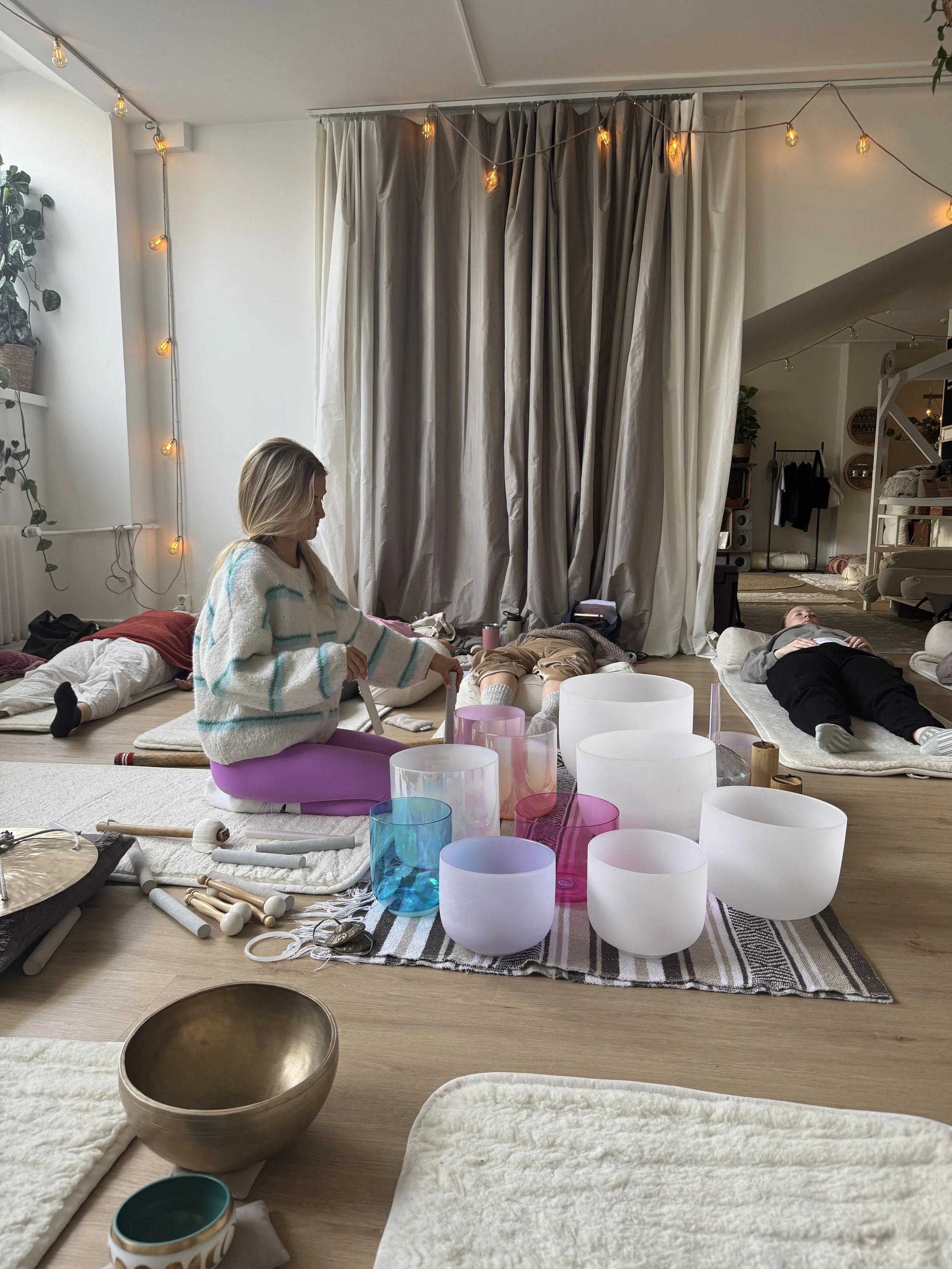
A sound bath is a deeply restorative experience where you rest comfortably while listening to soothing sounds and vibrations from instruments such as crystal singing bowls, Tibetan bowls, gong, chimes and other sound healing instruments. Despite the name, there is no water involved — you are simply “bathed” in sound.
For many people, a sound bath offers a rare chance to slow down, soften and step out of the usual mental noise of everyday life.
How does a sound bath work?
During a sound bath, you usually lie down on a yoga mat, blanket or other comfortable surface while the practitioner plays a range of instruments designed to create layered, immersive sound.
The experience is often deeply calming. Many people describe feeling their body soften, their thoughts slow down and their breath become more natural. Sound baths are commonly used to support relaxation, rest and a stronger connection to the present moment.
The vibrations and tones of the instruments can create a meditative atmosphere that helps shift attention away from stress and towards a more grounded inner state.
What are the benefits of a sound bath?
People experience sound baths in different ways, but many turn to them for support with:
deep relaxation
stress relief
nervous system regulation
mental clarity
emotional release
improved sleep
mindfulness and inner awareness
feeling more grounded and connected
For some, a sound bath feels meditative. For others, it simply feels like a powerful way to pause, receive and rest.
While each experience is unique, one of the biggest benefits of a sound bath is that it creates space — space to slow down, to feel, and to come back to yourself.
What happens during a sound bath session?
If you are attending a sound bath for the first time, the experience is usually very simple.
You arrive in comfortable clothes and settle onto a yoga mat or other soft surface. You may be invited to lie down, close your eyes and relax. From there, the practitioner guides the experience through sound.
A session may include instruments such as:
crystal singing bowls
Tibetan singing bowls
gong
koshi chimes
rainstick
drum or other grounding instruments
Most sound baths last between 45 and 75 minutes, depending on the setting. Some sessions also include a short meditation, breathwork or a few grounding words at the beginning and end.
You do not need any previous experience to attend a sound bath. The practice is accessible to most people and is often appreciated precisely because it asks so little of you. You simply arrive, lie down and receive.
What does a sound bath feel like?
Every sound bath experience is different. Some people feel deeply relaxed almost immediately, while others notice emotions, memories or physical sensations arising during the session. Some drift into a dream-like state, while others stay fully awake and present the whole time.
There is no right way to experience a sound bath.
For many people, the most noticeable effect is the feeling afterwards: calmer, clearer, softer and more grounded.
Who is a sound bath for?
Sound baths can be a beautiful choice for anyone looking to slow down and reconnect. They are popular with people who feel stressed, overwhelmed, mentally busy or simply in need of rest.
They can also be a meaningful addition to:
private sessions
group gatherings
corporate wellbeing days
retreats
workshops
special events
Because the experience is gentle and accessible, sound baths are suitable for many different kinds of people and settings.
How often should you do a sound bath?
There is no fixed rule. Some people come to a sound bath occasionally, whenever they feel called to reset. Others make it part of their monthly or weekly wellbeing practice.
Like yoga, meditation or massage, the frequency depends on your needs, schedule and what kind of support you are looking for.
Even one sound bath can feel powerful. Over time, regular sessions may offer a deeper sense of rhythm, rest and reconnection.
Sound bath vs sound healing: what is the difference?
The terms sound bath and sound healing are often used interchangeably, but they can sometimes mean slightly different things.
A sound bath usually refers to a group or private experience where you rest and receive sound in a passive, immersive way. Sound healing is a broader term that can include sound baths, one-to-one sessions and other practices that use sound as a supportive tool for relaxation, awareness and wellbeing.
In everyday use, many people use both terms to describe the same kind of experience.
Experience a sound bath in Helsinki
If you are curious to experience a sound bath for yourself, I offer sound healing sessions in Helsinki for private clients, groups and companies, as well as trainings and events for those who want to explore this work more deeply.
Whether you are looking for a private sound healing session, a corporate sound bath or an upcoming event in Helsinki, sound can be a beautiful way to slow down, reset and reconnect.