

my life, spirituality, travels and more
What Is a Sound Bath? Benefits, What to Expect and How It Works
If you have ever wondered what a sound bath is, you are not alone. Sound baths have become increasingly popular as more people look for simple, effective ways to relax, regulate the nervous system and reconnect with themselves.
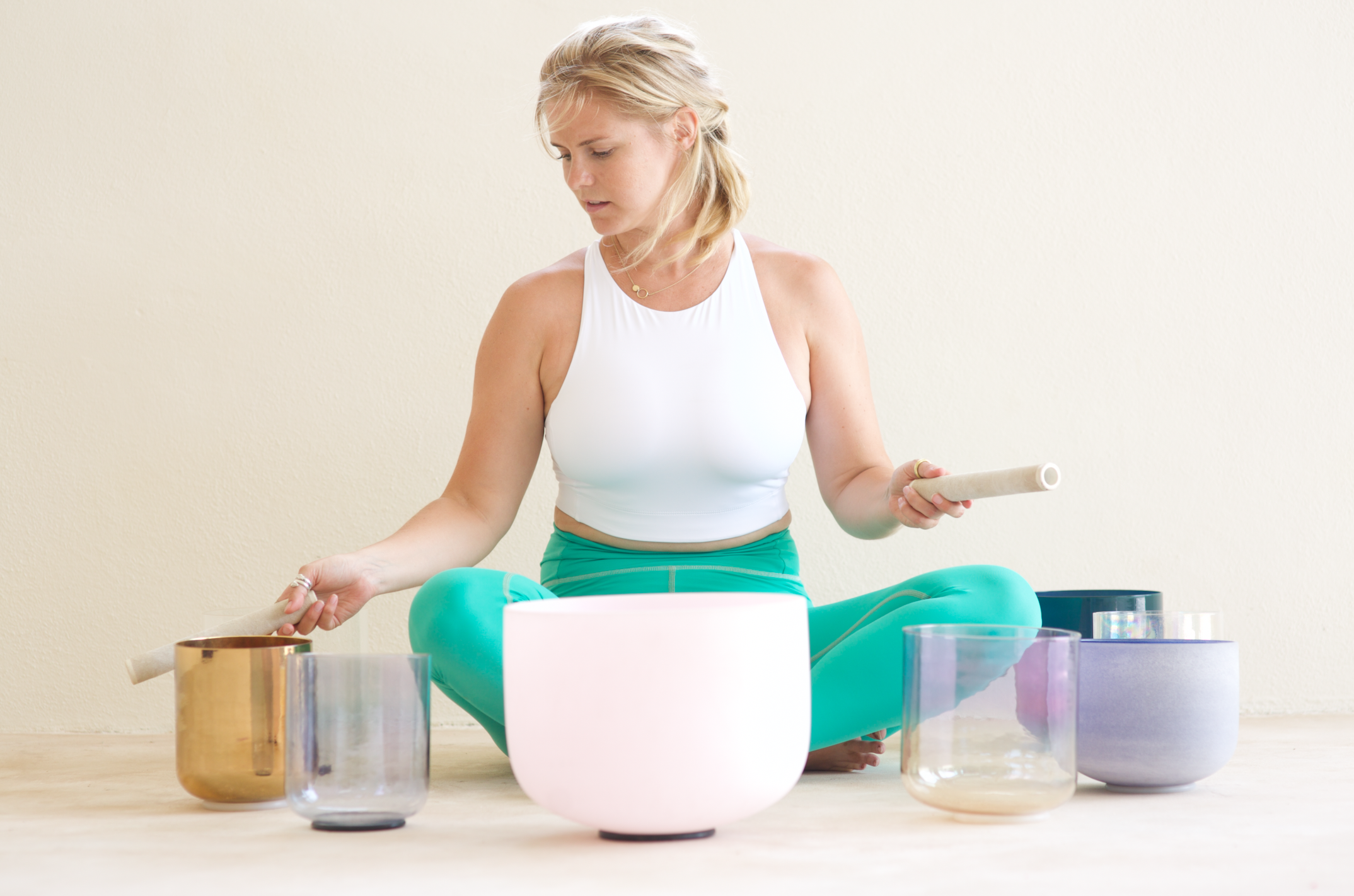
A sound bath is a deeply restorative experience where you rest comfortably while listening to soothing sounds and vibrations from instruments such as crystal singing bowls, Tibetan bowls, gong, chimes and other sound healing instruments. Despite the name, there is no water involved — you are simply “bathed” in sound.
For many people, a sound bath offers a rare chance to slow down, soften and step out of the usual mental noise of everyday life.
How does a sound bath work?
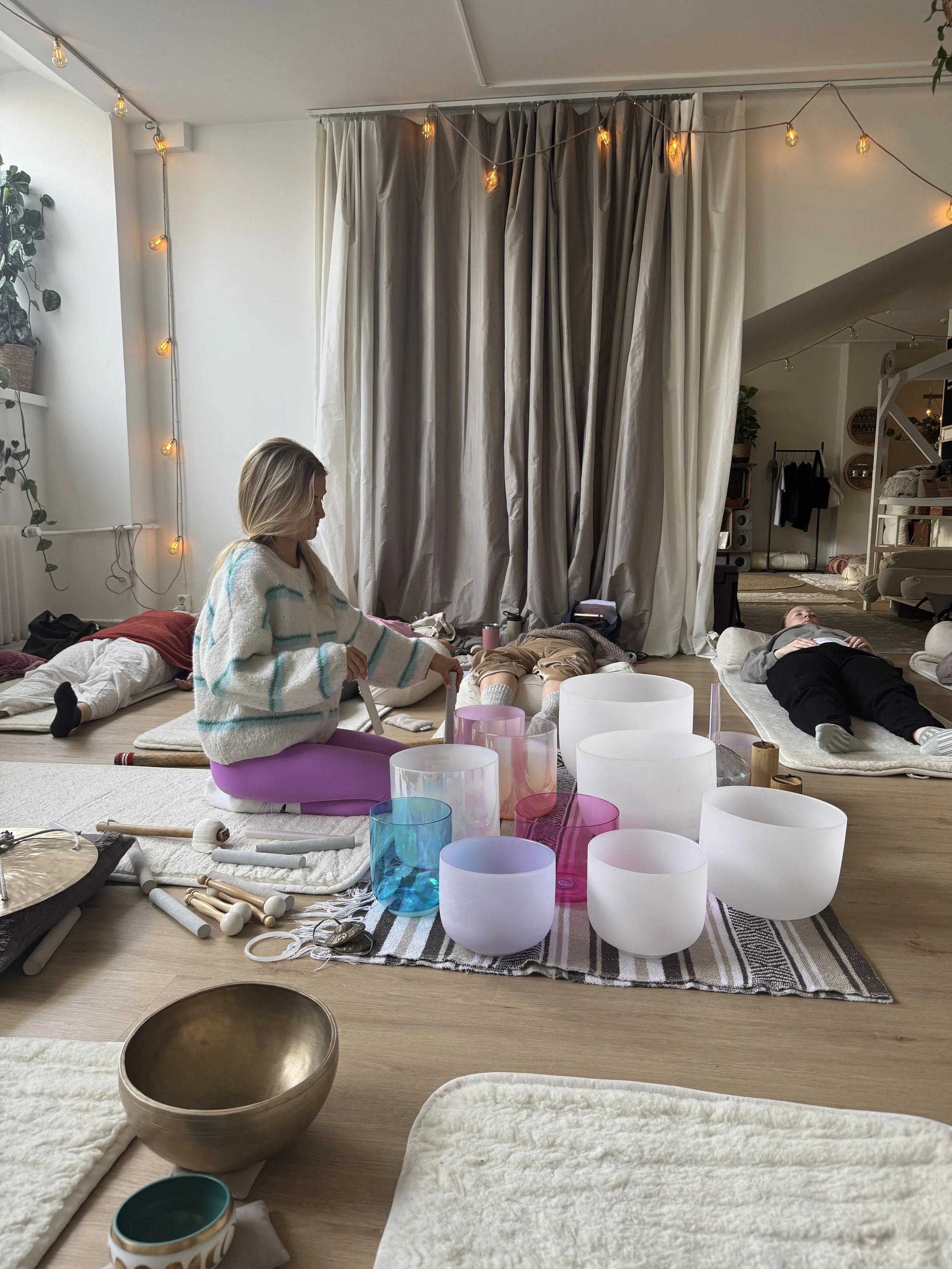
During a sound bath, you usually lie down on a yoga mat, blanket or other comfortable surface while the practitioner plays a range of instruments designed to create layered, immersive sound.
The experience is often deeply calming. Many people describe feeling their body soften, their thoughts slow down and their breath become more natural. Sound baths are commonly used to support relaxation, rest and a stronger connection to the present moment.
The vibrations and tones of the instruments can create a meditative atmosphere that helps shift attention away from stress and towards a more grounded inner state.
What are the benefits of a sound bath?
People experience sound baths in different ways, but many turn to them for support with:
deep relaxation
stress relief
nervous system regulation
mental clarity
emotional release
improved sleep
mindfulness and inner awareness
feeling more grounded and connected
For some, a sound bath feels meditative. For others, it simply feels like a powerful way to pause, receive and rest.
While each experience is unique, one of the biggest benefits of a sound bath is that it creates space — space to slow down, to feel, and to come back to yourself.
What happens during a sound bath session?
If you are attending a sound bath for the first time, the experience is usually very simple.
You arrive in comfortable clothes and settle onto a yoga mat or other soft surface. You may be invited to lie down, close your eyes and relax. From there, the practitioner guides the experience through sound.
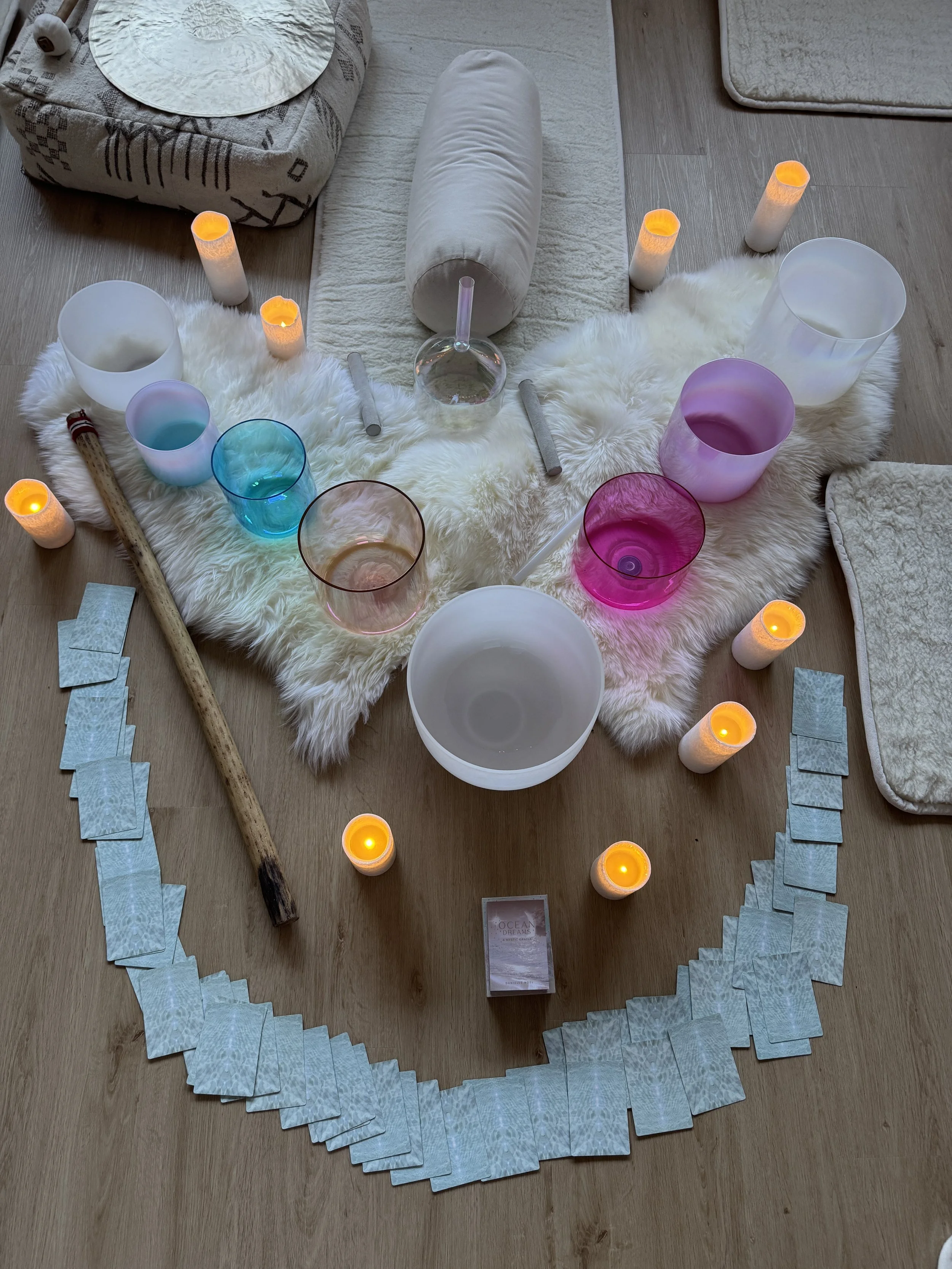
A session may include instruments such as:
crystal singing bowls
Tibetan singing bowls
gong
koshi chimes
rainstick
drum or other grounding instruments
Most sound baths last between 45 and 75 minutes, depending on the setting. Some sessions also include a short meditation, breathwork or a few grounding words at the beginning and end.
You do not need any previous experience to attend a sound bath. The practice is accessible to most people and is often appreciated precisely because it asks so little of you. You simply arrive, lie down and receive.
What does a sound bath feel like?
Every sound bath experience is different. Some people feel deeply relaxed almost immediately, while others notice emotions, memories or physical sensations arising during the session. Some drift into a dream-like state, while others stay fully awake and present the whole time.
There is no right way to experience a sound bath.
For many people, the most noticeable effect is the feeling afterwards: calmer, clearer, softer and more grounded.
Who is a sound bath for?
Sound baths can be a beautiful choice for anyone looking to slow down and reconnect. They are popular with people who feel stressed, overwhelmed, mentally busy or simply in need of rest.
They can also be a meaningful addition to:
private sessions
group gatherings
corporate wellbeing days
retreats
workshops
special events
Because the experience is gentle and accessible, sound baths are suitable for many different kinds of people and settings.
How often should you do a sound bath?
There is no fixed rule. Some people come to a sound bath occasionally, whenever they feel called to reset. Others make it part of their monthly or weekly wellbeing practice.
Like yoga, meditation or massage, the frequency depends on your needs, schedule and what kind of support you are looking for.
Even one sound bath can feel powerful. Over time, regular sessions may offer a deeper sense of rhythm, rest and reconnection.
Sound bath vs sound healing: what is the difference?
The terms sound bath and sound healing are often used interchangeably, but they can sometimes mean slightly different things.
A sound bath usually refers to a group or private experience where you rest and receive sound in a passive, immersive way. Sound healing is a broader term that can include sound baths, one-to-one sessions and other practices that use sound as a supportive tool for relaxation, awareness and wellbeing.
In everyday use, many people use both terms to describe the same kind of experience.
Experience a sound bath in Helsinki
If you are curious to experience a sound bath for yourself, I offer sound healing sessions in Helsinki for private clients, groups and companies, as well as trainings and events for those who want to explore this work more deeply.
Whether you are looking for a private sound healing session, a corporate sound bath or an upcoming event in Helsinki, sound can be a beautiful way to slow down, reset and reconnect.
Chakras and Sound Healing: A Beginner’s Guide to the 7 Chakras
The chakra system is an ancient energetic framework that is still widely explored in yoga, meditation and sound healing today. If you have ever been curious about the 7 chakras, what they represent, and how they connect to sound healing, this guide is for you.
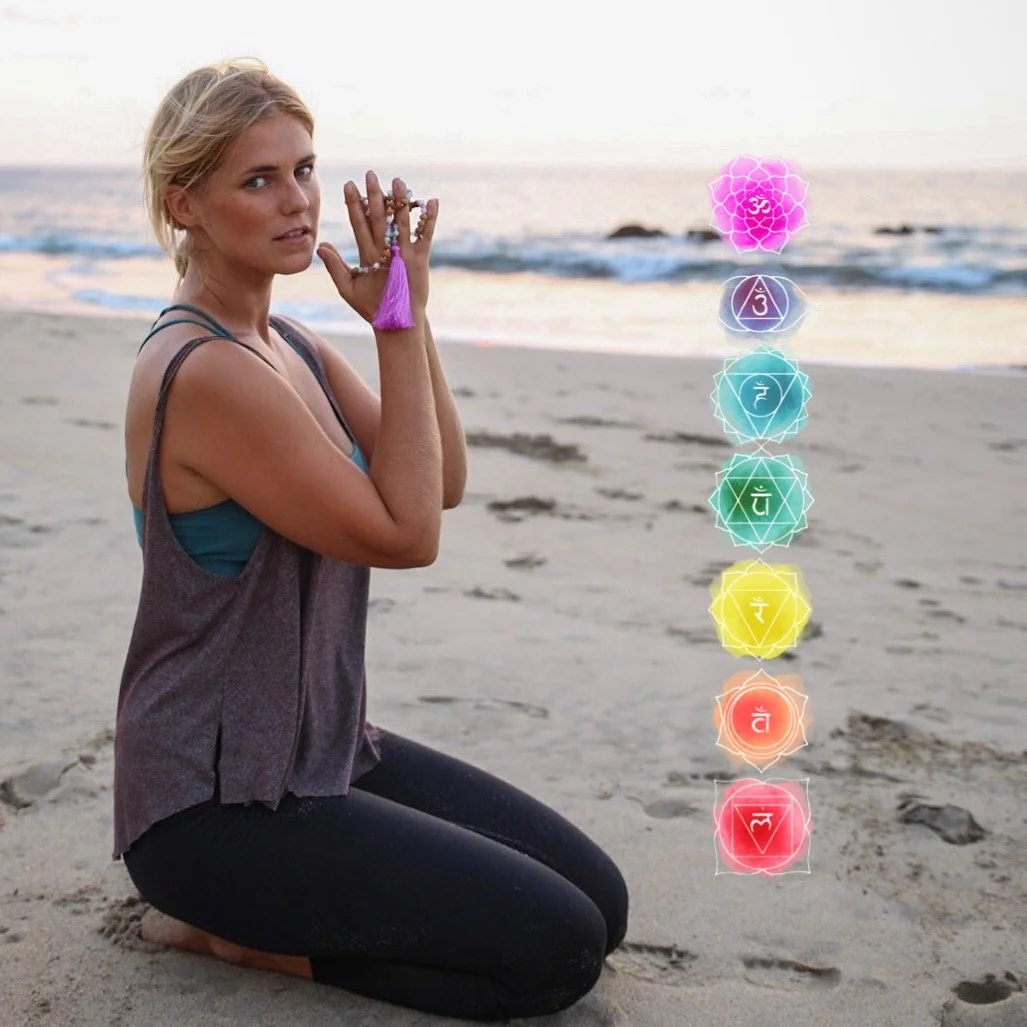
In many spiritual traditions, chakras are described as wheels of energy within the subtle body. They are often seen as energetic centres connected to different areas of life, emotions, physical regions of the body, and inner growth.
In my own work with chakra yoga, meditation and sound healing, I often return to this idea: everything is energy. The thoughts you think, the words you speak, the actions you take, the food you eat, and the environments you move through can all affect how you feel.
Your physical body is one layer of your experience, but many traditions also speak of a subtle body made up of energetic centres, lines and sheaths. Within this system, there are seven primary chakras that are often explored through movement, breathwork, meditation and sound healing.
What is the chakra system?
The chakra system describes seven main energy centres in the body, moving from the base of the spine to the crown of the head. Each chakra is associated with certain qualities, themes and parts of the body.
While different traditions and teachers may interpret the chakras in slightly different ways, the seven-chakra model is one of the most widely known. In yoga, meditation and sound healing, chakras are often used as a framework for self-inquiry, energetic awareness and balance.
How do chakras relate to sound healing?
Sound healing and sound baths are often used to support deep relaxation, nervous system regulation and inner awareness. In some traditions, different tones or frequencies are also associated with different chakras.
Many people experience sound healing as a way to reconnect with themselves, release tension and create a sense of balance. Whether you relate to the chakras as a spiritual system, an energetic map, or simply a reflective tool, they can offer a meaningful lens through which to explore healing.
The 7 chakras explained
1. Root Chakra
The root chakra is associated with grounding, safety and stability. It is located at the base of the spine and connects to the pelvis.
Themes connected to the root chakra include home, finances, security, survival and primal needs. In yoga, standing poses, balancing poses and hip openers are often linked to this energy centre. The root chakra is commonly associated with the colour red, the element of earth and, in some sound healing traditions, the frequency 396 Hz.
2. Sacral Chakra
The sacral chakra is connected to emotions, sensuality, pleasure, creativity and flow. It is located in the lower pelvis and is often associated with the sacrum.
Practices that open the hips are often connected to this chakra in yoga. The sacral chakra is commonly linked with the colour orange, the element of water and, in some traditions, the frequency 417 Hz.
3. Solar Plexus Chakra
The solar plexus chakra is associated with self-worth, confidence, identity and personal power. It is located above the navel and connects to the core.
In yoga, core work and twists are often related to this centre. The solar plexus chakra is commonly linked with the colour yellow, the element of fire and, in some sound healing traditions, the frequency 528 Hz.
4. Heart Chakra
The heart chakra relates to love, compassion, joy and self-love. It is located in the centre of the chest.
Heart-opening practices and backbends are often connected to this chakra in yoga. The heart chakra is commonly associated with the colour green, the element of air and, in some traditions, the frequency 639 Hz.
5. Throat Chakra
The throat chakra is connected to communication, self-expression, honesty and boundaries. It is located in the centre of the neck.
In yoga and breathwork, practices such as mantra, lion’s breath, head rolls and gentle neck stretches are often linked to this energy centre. The throat chakra is commonly associated with the colour blue, the element of ether and, in some traditions, the frequency 741 Hz.
6. Third Eye Chakra
The third eye chakra is associated with intuition, insight, imagination and wisdom. It is located between the eyebrows.
Meditation and inward-focused practices are often linked to this chakra, and in some yoga traditions inversions are also included. The third eye chakra is commonly associated with indigo or deep purple and, in some sound healing traditions, the frequency 852 Hz.
7. Crown Chakra
The crown chakra is associated with consciousness, spirituality and connection to something greater than yourself. It is located above the head.
Meditation, stillness and contemplative practices are often connected to this chakra. The crown chakra is commonly associated with white or violet and, in some traditions, the frequency 963 Hz.
Can sound healing support chakra balance?
Many people turn to sound healing as a way to feel more grounded, clear, open or connected. Within chakra-based practices, sound is sometimes used to support awareness around specific energy centres.
For some, this feels deeply spiritual. For others, it is simply a powerful way to slow down, regulate the nervous system and reconnect with the body.
You do not need to know anything about chakras to enjoy a sound bath. But for those who feel drawn to the energetic side of the practice, the chakra system can offer a meaningful and inspiring framework.
Experience sound healing in Helsinki
If you are curious to experience sound healing for yourself, I offer sound healing sessions in Helsinki for private clients, groups and companies, as well as trainings and courses for those who want to go deeper.
You can explore my sound healing offerings, join an event, or book a private sound healing session in Helsinki to experience the practice in a grounded and supportive way.